Dussehra / Vijayadashami

Unique Dussehra Celebrations Across India
Dussehra, also known as Vijayadashami, stands as one of the most vibrant and deeply revered Hindu festivals. Falling on the tenth day of the Hindu month of Ashwin, it marks the spectacular conclusion of the nine-day Navratri festival.
The Dual Legends Behind the Tradition
1. Lord Rama's Victory Over Ravana
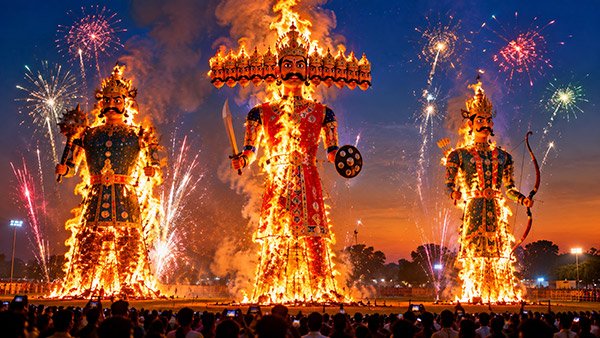
In Northern, Western, and Central India, the festival celebrates Lord Rama's victory after a fierce ten-day battle to rescue his wife Sita. Large effigies of Ravana, his brother Kumbhkaran, and son Meghnath are burned with fireworks in open grounds
2. Goddess Durga's Defeat of Mahishasura
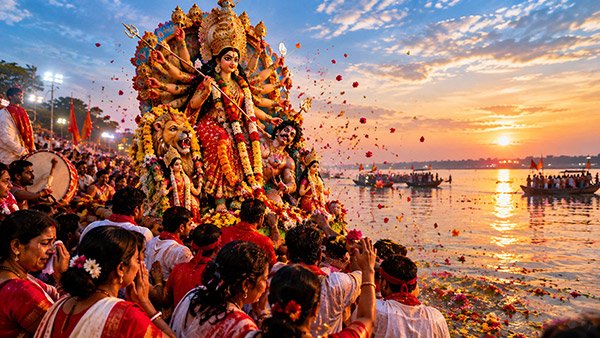
In Eastern and Northeastern regions, especially West Bengal, Dussehra marks the final day of Durga Puja. Devotees bid a emotional farewell to Goddess Durga, celebrating her triumph over the demon Mahishasura before immersing the idols in water.
How People Celebrate This Festival Across India
- Burning Effigies in the North: Massive paper statues of Ravana, Kumbhakarna, and Meghnada, filled with crackers, are set on fire in large grounds as crowds gather to watch.
- Exchanging Golden Leaves in Maharashtra: People visit friends and family to exchange Apta leaves, treating them like gold and wishing each other happiness and prosperity.
- The Grand Mysuru Dasara: In Karnataka, the famous Mysuru Palace is lit up with thousands of lights, and a stunning procession with decorated elephants rolls through the streets.
- Ayudha Puja: Many families and shopkeepers clean and decorate their vehicles, tools, and books with marigold flowers to show gratitude for things that help them earn a living.


